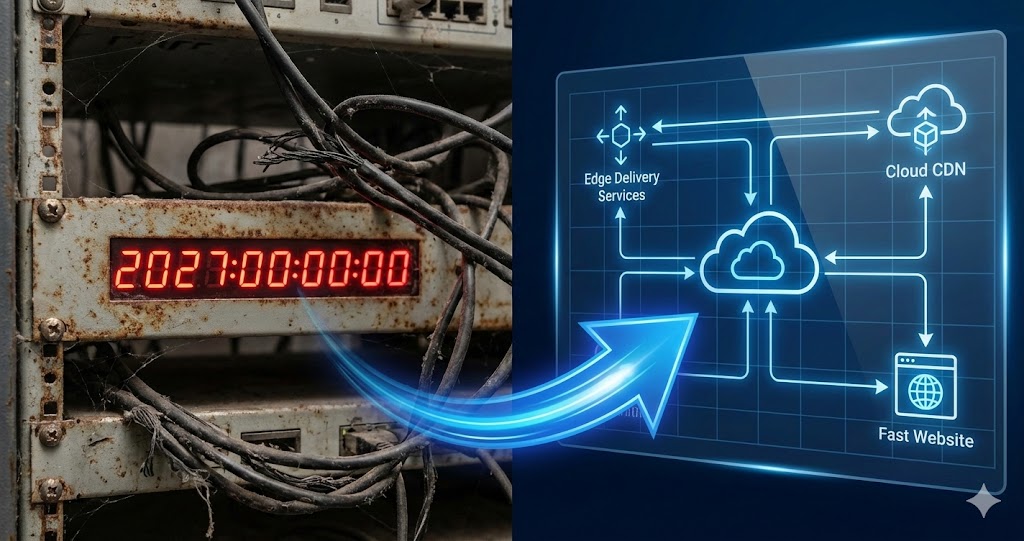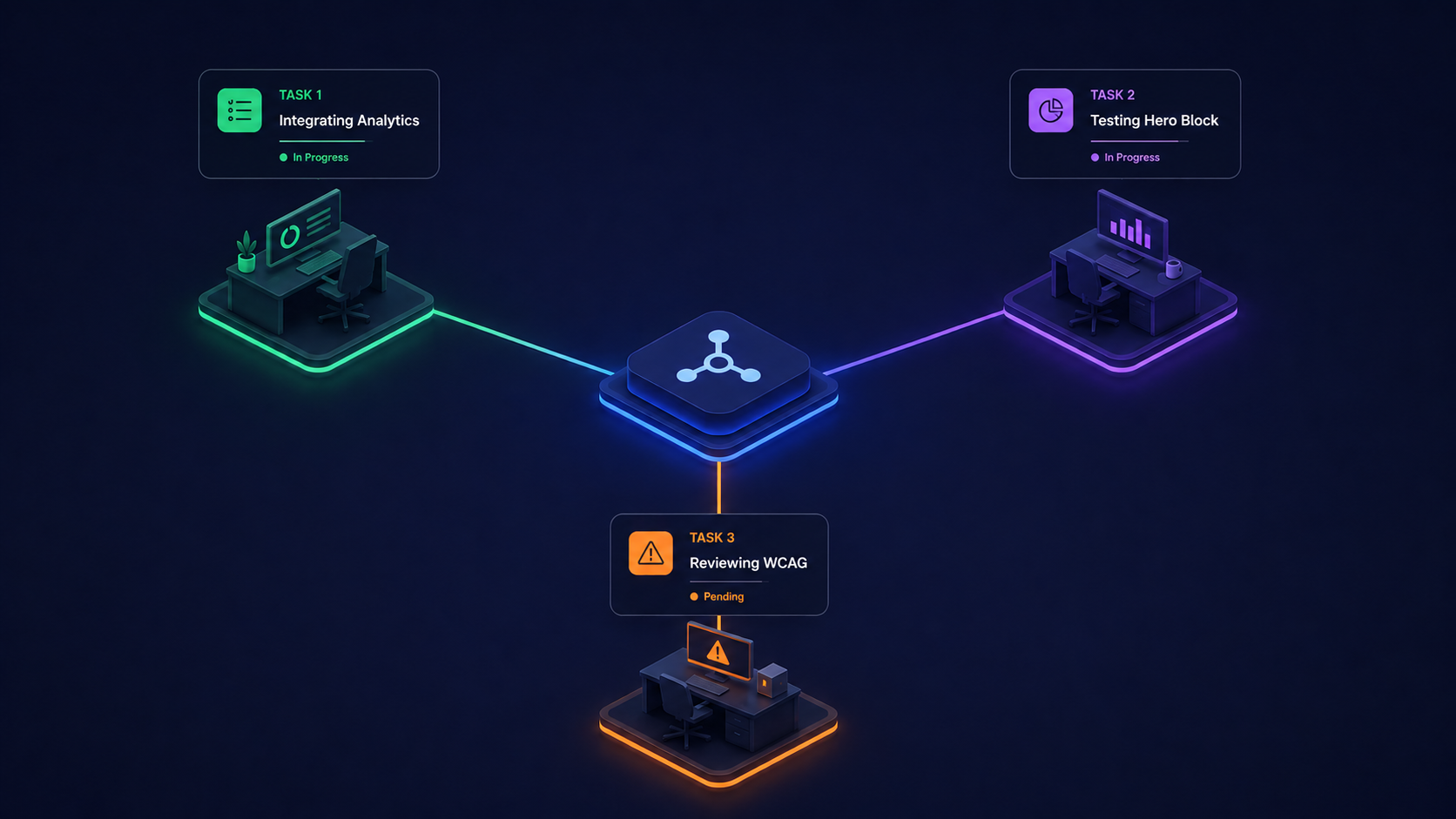
Most organizations don’t decide to fall behind; they simply decide to wait.
For years, we lived inside the same reality our customers are in now.
Messy tech stacks held together by tribal knowledge. Critical workflows spread across spreadsheets, chat threads, and half-adopted tools. AI experiments spinning up on the side with no real governance or path to production. Everyone working hard (too hard) but still feeling like they’re dragging a parachute behind the business.
United Logic was born out of that tension.
We didn’t start as a product company first. We started as architects and operators inside real enterprises, responsible for making Adobe, AI, and complex digital ecosystems actually work. We saw what happens when teams delay hard decisions for “one more quarter” or wait for the mythical “perfect platform” to arrive.
What we learned is simple: doing nothing is not neutral. It’s expensive.
The hidden tax of “we’ll fix it later”
On the surface, it can seem safer to stick with the status quo:
- Keep the manual routing in place.
- Let teams continue using their preferred tools.
- Keep that AI pilot running as a “lab experiment.”
- Promise that next year will be the year things get unified.
The problem is that every one of those choices has a compounding cost attached to it.
1. Lost time you’ll never get back
When workflows rely on copy-paste, human hand-offs, and “ping me when it’s ready,” your people are context-switching all day. That’s more meetings, more follow-ups, and more friction, especially across marketing, product, and technology.
You don’t see a line item for this in the budget, but you feel it in:
- Delayed launches
- Slower iteration cycles
- Teams that are always “at capacity” but rarely moving strategic work forward
2. Fragmented data and inconsistent decisions
When each team builds its own mini-stack and its own way of using AI, you end up with islands of logic:
- Different versions of “truth” about customers, content, and performance
- No consistent way to observe what’s happening end-to-end
- Automations you can’t fully trust or explain
This might not break anything today, but it quietly erodes decision quality and makes every change riskier than it needs to be.
3. AI that creates more chaos than clarity
We’ve all seen organizations rush to adopt AI assistants, custom copilots, or automation scripts with the best of intentions. Without a strong architecture and workflow model underneath, they often become:
- One-off shortcuts instead of systemic improvements
- Black boxes that nobody fully understands
- Fragile glue between systems that were never designed to work together
The end result: leaders lose confidence, teams get confused, and AI becomes something people “play with” instead of something the business can rely on.
How our story shaped our direction
At United Logic, we’ve sat in the middle of those problems from every angle: enterprise architecture, digital experience, and hands-on delivery.
We watched teams burn themselves out just trying to keep up with the complexity they’d accumulated over the years. We also saw the pressure from leadership to “do something with AI” without a clear strategy or operating model behind it.
That’s why we didn’t set out to build yet another point tool.
We built United Logic around a few clear beliefs:
-
Architecture first, not tool first. If the underlying flows of work and data aren’t well understood, no platform (ours included) will magically fix that.
-
AI should live inside real workflows, not off to the side. Assistants are only powerful when they sit inside the same context, rules, and governance as the rest of your operations.
-
Enterprise trust is earned, not claimed. We design for transparency, auditability, and measurable outcomes rather than just promising “intelligent automation.”
Our product and services reflect those beliefs: a vertically integrated way to model your workflows, connect your tools, embed AI where it actually helps, and keep the whole thing observable and governed.
What “doing something” actually looks like
When we talk to new customers, many of them assume “fixing this” means:
- A painful rip-and-replace project
- A 12–18 month transformation roadmap
- Massive disruption to day-to-day work
But we’ve seen that meaningful progress can start much smaller and more pragmatic.
Often, the first step is simply making the invisible visible:
- Mapping how work really gets done today
- Identifying where AI is already in use (formally or informally)
- Highlighting duplicate steps, manual approvals, and fragile hand-offs
From there, we help teams design a workflow and AI model that respects how they actually operate, not how a slide deck says they operate. We connect systems where it matters, automate what truly should be automated, and put guardrails around where AI is used and how.
Speed is only half the impact. The other half is confidence:
- Teams know where to go to see the state of work.
- Leaders can trust the metrics they’re seeing.
- AI becomes a reliable part of the operating model rather than a novelty or a risk.
The risk of waiting one more quarter
If our client work has made one thing clear, it’s this:
The cost of doing nothing is always paid in the scarcest resources you have: your people’s time, your customers’ patience, and your strategic momentum.
Markets will keep moving. Your competitors will keep experimenting. The technology will keep shifting underneath you. The real question is whether you’ll change on your own terms or be forced into rushed, reactive decisions later.
United Logic exists for leaders who are ready to make that shift deliberately, with clear architecture, thoughtful use of AI, and an operating model that can grow with them.
If you’re looking at your current workflows, tools, and scattered AI experiments and wondering what this inertia is really costing you, you’re not alone, and you don’t have to untangle it by yourself. Share a bit about your stack and your challenges, and we’ll send back a focused, practical view of where to start so “doing nothing” stops being the default.